Buildings
Car Wash Facility Roofing.
Car wash roofing in Charleston, SC built for the humidity and chemical vapor attacking the deck from inside the tunnel - express, in-bay, and self-serve sites.
Request Roof WalkCar Wash
Facility Roofing
Car Wash Facility Roofing Roof Planning
- Roof walk notes tied to the building's access, drainage, and operating limits.
- Photos and observations that separate urgent protection from longer-term scope planning.
- Clear next steps for repair, maintenance, coating, recover, replacement, or further testing.
Roof Scope Notes
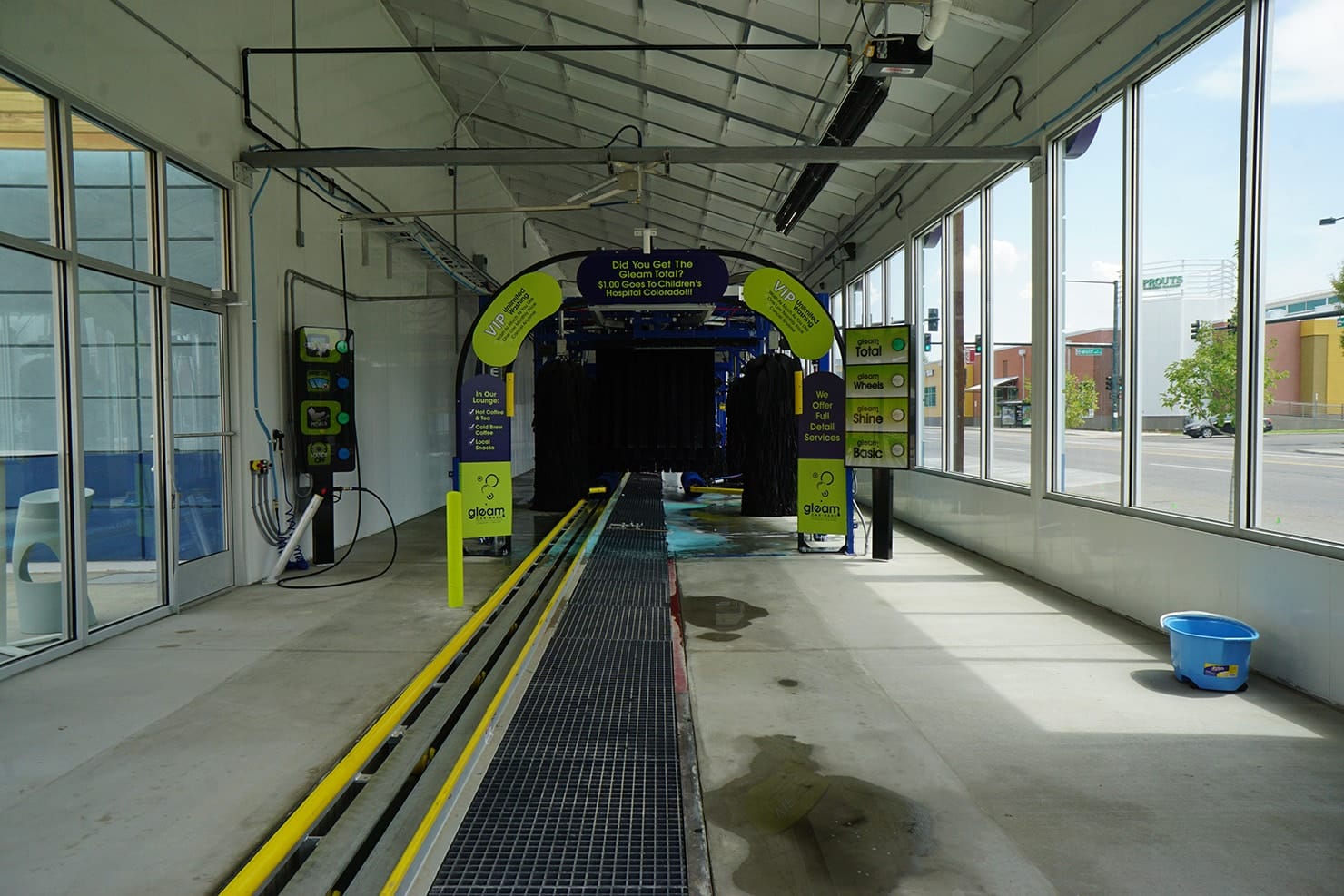
A car wash roof fails from the inside out. While most Charleston commercial buildings shed their weather load downward, a Wash Tunnel pushes a constant column of warm, chemical-laden vapor up against the underside of the deck every hour the equipment runs. We build and maintain roofs for express tunnels, in-bay automatics, and self-serve operations from the Sam Rittenberg Boulevard retail strip and the Savannah Highway corridor in West Ashley out to the high-volume sites clustered along Rivers Avenue in North Charleston and the newer express washes going up around Nexton and Cane Bay in Summerville. Each one fights the same enemy from below, and that changes everything about how the assembly has to be built.
Hot detergent spray, tire-dressing aerosol, drying agents, and the alkaline pre-soak that gives Lowcountry vehicles a fighting chance against road salt and pollen all flash into vapor inside the tunnel. That vapor finds the deck, the fastener heads, the seams, and any seam of insulation that is not vapor-tight. On a steel deck this is how you get rusted fasteners backing out and a membrane that looks fine from above while the panel beneath it is corroding. We treat the tunnel ceiling as a vapor barrier problem first and a weather barrier problem second, because the moisture drive here runs the opposite direction from a normal flat roof.
Charleston's outside air does the building no favors. For much of the year the ambient dew point is high enough that the deck never gets a real chance to dry between wash cycles. An assembly that traps moisture in our climate stays wet, and a wet assembly loses R-value and rots the deck whether or not a single drop ever drips into the bay. Getting the vapor retarder, the insulation, and the membrane stack right for a humid coastal site is the entire job on a car wash.
Not every single-ply handles wash chemistry the same way. The plasticizer package in a thick PVC sheet stands up to the alkaline detergents and waxes far better over the long haul than a standard TPO or EPDM, which is why we lean toward a heavier PVC over the tunnel itself. We will not put a membrane over a wash bay without first reading the chemical menu the operator actually runs, then confirming that the sheet and its warranty are rated for that exposure. Most standard single-ply warranties carry a chemical-exposure exclusion buried in the fine print, and a tunnel roof installed without addressing it is a warranty that does not exist.
We walk and price each of these zones separately rather than averaging them, because the tunnel and the lobby are essentially two different roofs sharing a property line.
A working tunnel pulls steam and vapor out through high-volume rooftop exhaust fans, and those penetrations are where the chemistry hits the membrane hardest. The continuous warm plume condenses on the curb and Edge Metal and accelerates everything. Oversized curbs, chemical-tolerant flashing details, and stainless or coated fasteners at those locations are not upgrades on a car wash, they are the baseline. We detail every fan, vent, and conduit run as its own item rather than relying on a generic curb wrap.
The vacuum arch on the exit side and the pay-station canopy out front are their own little roofs, and they fail on their own schedule. They take tire-dressing overspray, vehicle exhaust, and full sun, and the connection where the canopy ties back to the main building is the single most common chronic leak we find on Charleston express sites. Canopy gutters clog with leaf litter from the live oaks that line so many of our commercial lots, back up, and push water into the structure. We fold canopy membrane or panel work, gutter and downspout repair, and the canopy-to-building transition into the same scope as the main roof so the whole property is on one warranty and one maintenance schedule.
Questions Building Owners Ask
Related Roof Planning
Airport Terminal & Aviation Facility Roofing
Airport terminal and aviation facility roofing in Charleston, SC - Charleston International Airport and surrounding general aviation and cargo facilities.
Veterinary Clinic & Animal Hospital Roofing
Commercial roofing for veterinary clinic & animal hospital roofing in Charleston, SC - specifications, scheduling, and project coordination for this building type.
Big-Box Retail Roofing
Big-Box Retail Roofing for Charleston commercial buildings. Roof inspection, documentation, repair, maintenance, and replacement planning.
Government and Municipal Roofing
Government and Municipal Roofing for Charleston commercial buildings. Roof inspection, documentation, repair, maintenance, and replacement planning.
Senior Living Facility Roofing
Senior Living Facility Roofing for commercial buildings across Charleston.
Insulation and Recovery Board
Insulation and Recovery Board for Charleston commercial buildings. Roof inspection, documentation, repair, maintenance, and replacement planning.
Start With The Roof
Get
A Clear
Next Move.
Active leak, aging flat roof, coating question, replacement budget, or service agreement, start with the building address and what you are seeing. We will help move the roof from problem to plan.