Buildings
Airport Terminal & Aviation Facility Roofing.
Airport terminal and aviation facility roofing in Charleston, SC - Charleston International Airport and surrounding general aviation and cargo facilities.
Request Roof WalkAirport Terminal
& Aviation Facility Roofing
Airport Terminal & Aviation Facility Roofing Roof Planning
- Roof walk notes tied to the building's access, drainage, and operating limits.
- Photos and observations that separate urgent protection from longer-term scope planning.
- Clear next steps for repair, maintenance, coating, recover, replacement, or further testing.
Roof Scope Notes
An airport roof is the one job where the building never closes for you. Charleston International Airport runs flights and operations around the clock, and it shares its airfield with Joint Base Charleston, one of the Air Force's major airlift and cargo hubs. Every access point, every material lift, and every crew movement on a roof here has to be cleared through the airport's facilities team, the FAA Part 139 safety program, and in airside areas the security protocols that come with a joint civil-military field. We build that coordination into the scope before a contract is signed, because on an operating airfield it cannot be improvised after mobilization.
CHS and the surrounding aviation footprint drive the bulk of this work in the Lowcountry - the passenger terminal and its ongoing expansions, the Joint Base cargo and maintenance complex, air-freight and logistics buildings tied to the field, and the rental-car and support structures on the airport campus. Out on the east side of the harbor, Mount Pleasant Regional Airport (LRO) and the general-aviation operators there represent a smaller but steady demand for hangar and FBO roofing.
Terminal roofs cover very large, low-slope expanses, and at that scale drainage is the whole ballgame. A flat field this size has almost no tolerance for ponding - standing water adds dead load, finds every weak seam, and shortens membrane life fast. We design for positive drainage with tapered insulation, size the primary and overflow drainage for Lowcountry downpours, and treat ponding as a defect to be corrected, not a cosmetic note. On a roof measured in acres, small slope and drainage errors become large, expensive problems.
Charleston sits on the hurricane coast, and an airfield is one of the most wind-exposed sites in the region - open, flat, and unsheltered. Airside roofs also take Jet Blast and the prop and engine wash that come with aircraft operations, which means membrane attachment and edge securement have to exceed what a comparable inland logistics building would need. We specify attachment and perimeter detailing for the uplift these roofs actually see, because a panel or section that lifts on an active airfield is a foreign-object-debris hazard, not just a roof failure.
Terminals carry far more rooftop equipment than ordinary commercial buildings - large, heavy air handlers and a high count of curbed penetrations to condition wide concourses and crowded gate areas. Every curb and through-penetration is engineered as its own detail; standard small-building flashing patterns are not adequate at this density or under these loads. We document every penetration, curb height, and clearance in the pre-project survey before building the work plan, so the equipment that keeps the terminal comfortable for travelers stays dry and supported.
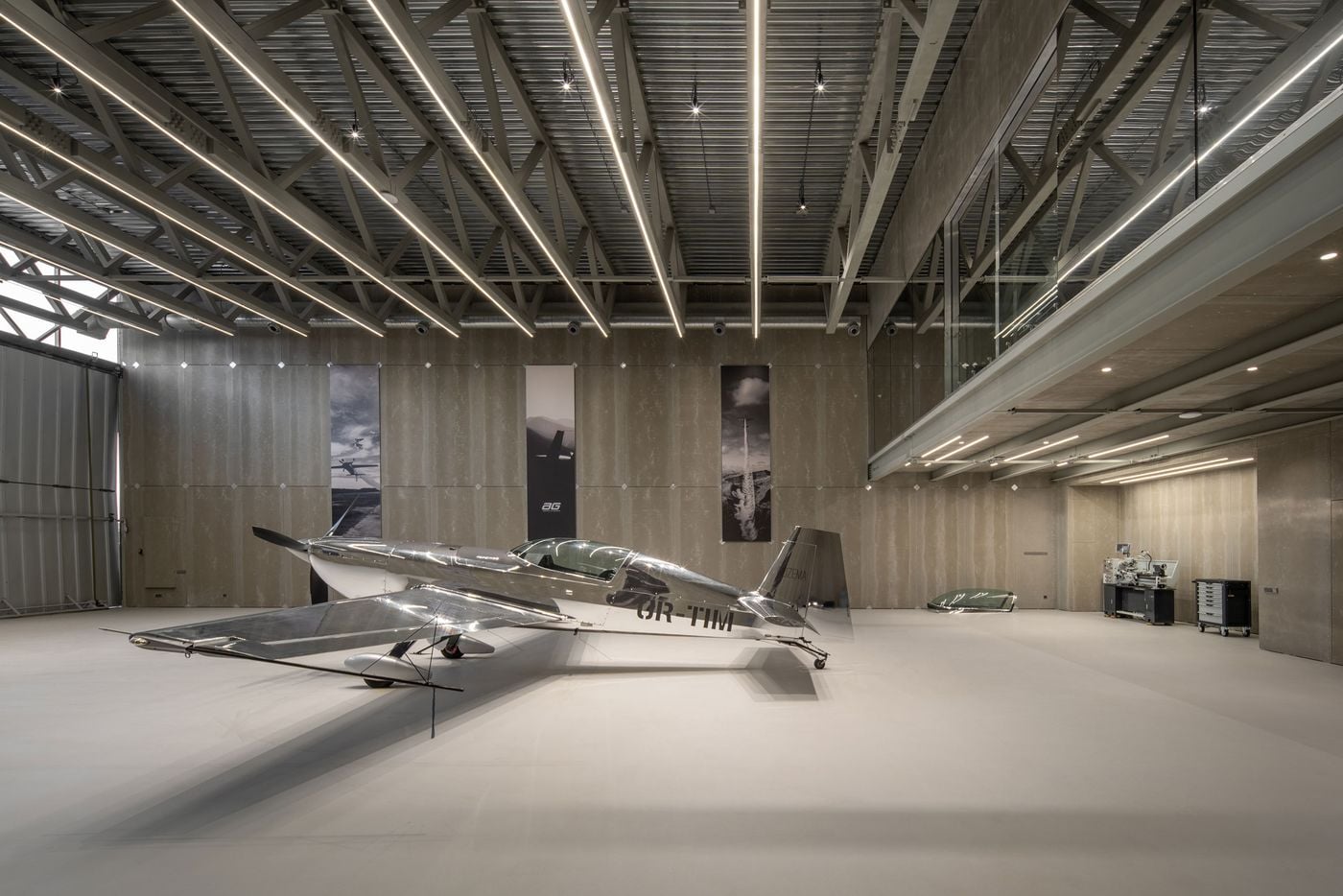
Aviation roofing is more than the terminal. Cargo facilities, maintenance buildings, rental-car centers, and FBO and private hangars on and around the field each have their own profile, but the access and credentialing requirement never goes away on airport property. High-bay hangars in particular are demanding structures - wide clear-span or pre-engineered frames that generate significant uplift and thermal movement, requiring fastening patterns and seam geometry suited to those spans. Standing seam metal is frequently the right system for new high-bay aviation structures, while single-ply over tapered insulation suits most terminal and support-building reroofs. We confirm the system after walking the roof with the facilities engineer rather than assuming one. Each building on the campus gets evaluated on its own deck, load capacity, and operational constraints, since a passenger terminal, a cargo dock, and a maintenance hangar rarely call for the same assembly even when they sit on the same field.
On an airfield, a loose piece of edge metal or a torn membrane flap is not just a roof problem - it is potential foreign-object debris near aircraft, and that raises the stakes on routine maintenance. Large terminal and hangar roofs benefit from a scheduled inspection cadence that catches backed-out fasteners, lifting laps, and loose perimeter metal before wind turns them into a hazard or a leak over a crowded concourse. We set up preventive maintenance and documented roof inspections for aviation owners, with particular attention to perimeter securement, the dense run of equipment curbs, and the drainage that a flat acre of roof depends on. Keeping the roof tight and the edges fastened protects both the building and the operation below it, and it keeps small issues from becoming the kind of disruption an around-the-clock airport cannot easily absorb.
Questions Building Owners Ask
Related Roof Planning
Casino & Entertainment Complex Roofing
Commercial roofing for casino & entertainment complex roofing in Charleston, SC - specifications, scheduling, and project coordination for this building type.
Auto Dealership Roofing
Auto Dealership Roofing for Charleston commercial buildings. Roof inspection, documentation, repair, maintenance, and replacement planning.
Self-Storage Facility Roofing
Self-Storage Facility Roofing for Charleston commercial buildings. Roof inspection, documentation, repair, maintenance, and replacement planning.
Movie Theater & Cinema Roofing
Movie theater roofing in Charleston, SC engineered for column-free long-span auditorium decks - sound insulation, dense rooftop HVAC, and work around showtimes.
Sports & Recreation Facility Roofing
Roofing for Charleston, SC sports and recreation facilities - long-span gym and arena decks, natatorium chloramine-resistant flashing, interior humidity control, and.
Self-Storage Facility Roofing
Commercial roofing for self-storage facilities, mini-storage buildings, and climate-controlled storage properties throughout Charleston, SC.
Start With The Roof
Get
A Clear
Next Move.
Active leak, aging flat roof, coating question, replacement budget, or service agreement, start with the building address and what you are seeing. We will help move the roof from problem to plan.