Buildings
Bank & Financial Building Roofing.
Roofing for Charleston, SC bank branches and financial buildings - drive-through canopy flashing, server-room and vault protection, security-access scheduling, and.
Request Roof WalkBank &
Financial Building Roofing
Bank & Financial Building Roofing Roof Planning
- Roof walk notes tied to the building's access, drainage, and operating limits.
- Photos and observations that separate urgent protection from longer-term scope planning.
- Clear next steps for repair, maintenance, coating, recover, replacement, or further testing.
Roof Scope Notes
A bank branch is a small, high-visibility flat roof sitting directly over the things a financial institution can least afford to get wet - the vault, the server room, and a lobby full of customers. We roof branches, credit union offices, and financial-services buildings throughout the Charleston area, from the corporate offices and historic-block branches on the peninsula to the freestanding pad sites along the Ashley Phosphate Road commercial belt and the new retail nodes filling in around Summerville, Goose Creek, and Mount Pleasant. These are not big square-footage jobs, but they are detail-heavy and they carry rules most commercial roofs do not.
The footprint stays modest while the demands pile up. A typical branch packs a drive-through canopy, an ATM, a rooftop unit or two, and often a generator and a server-room cooling unit onto a roof smaller than a single big-box bay. Add a busy customer-facing operation below and a brand that wants its building looking sharp from a corner lot, and you have a roof where the small details decide whether the job succeeds.
When a branch leaks, the canopy is the first place we look. The point where The Drive-through canopy roof ties into the building wall takes constant thermal cycling, differential movement between two separate structures, and overspray from vehicles and weather, and standard retail flashing details do not hold up to that combination long-term. We treat the canopy-to-wall transition as its own scope item, evaluate it separately from the field membrane, and re-flash it with a detail built for the movement these connections actually see. Replacing the main roof and ignoring the canopy joint is how a branch keeps leaking after a full reroof.
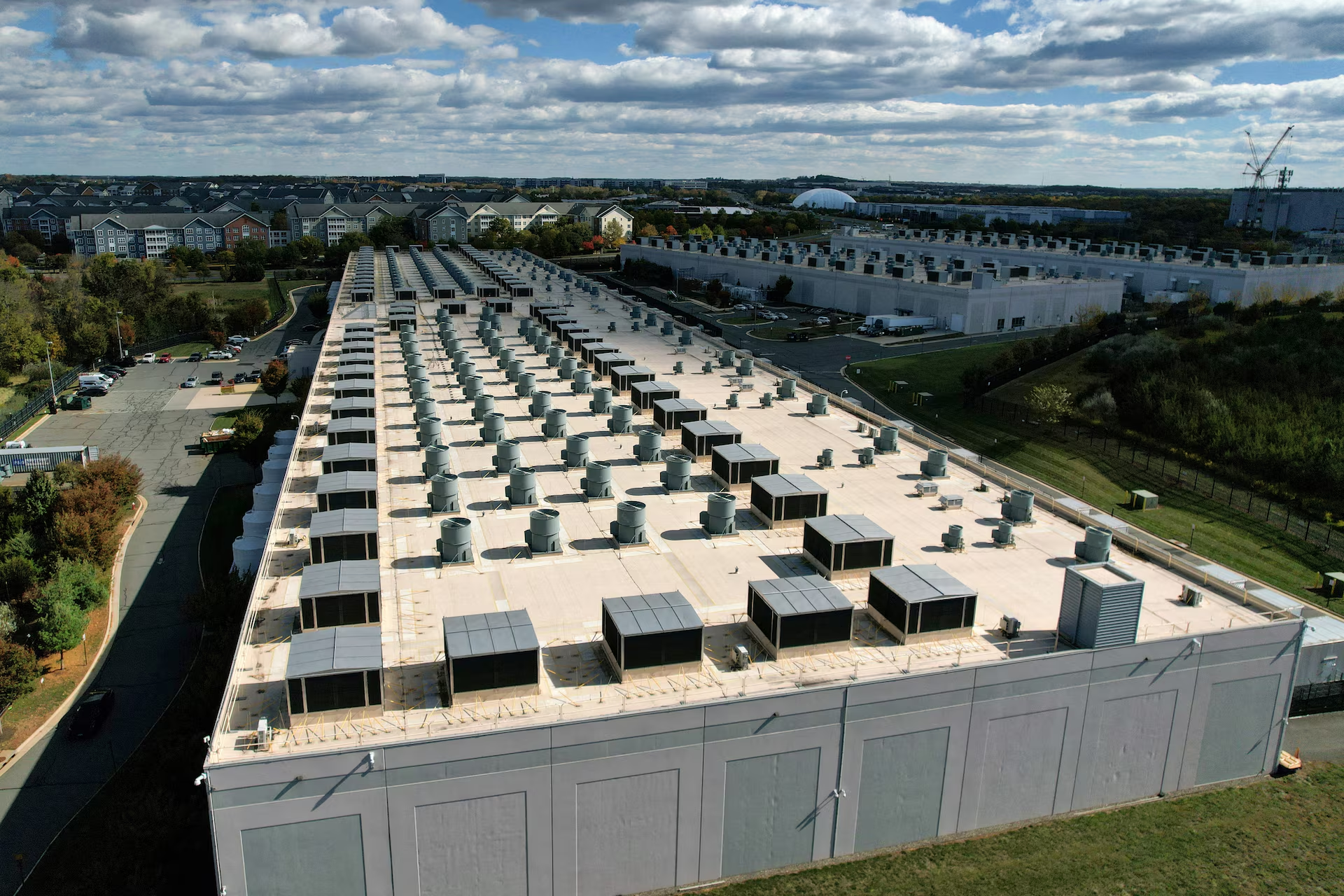
Branch roofs run dense for their size. Between the ATM enclosure, the rooftop HVAC, the generator exhaust, and the precision cooling that keeps the server and network room within tolerance, there are a lot of curbs and penetrations packed into a small field. Each one is a discrete flashing detail, and undersized or tired curbs over a server room are a real exposure - water over that equipment is an outage and a data problem, not just a stain. We inventory every penetration, confirm curb heights, and rebuild the ones that fall short of warranty minimums.
Financial buildings control who gets on the property more tightly than almost any other commercial type, and that shapes the schedule. Contractor badging, escort requirements near vault-adjacent areas, and camera documentation of crew activity are routine on bank-owned sites in Charleston. We build the credentialing and coordination timeline into the bid from the start so it is a known part of the schedule rather than a surprise after the contract is signed. Where vault rooms sit under a work zone, we locate them from the drawings, confirm with the security team that vibration and temporary access changes will not affect operations, and sequence that area into an approved window.
Branches run tight business hours, often Monday through Saturday, and the lobby cannot have construction noise during customer service. We concentrate tear-off and the loud work into off-hours and weekend windows and confirm a watertight dry-in before the doors open each morning. Because these are corner-lot, high-visibility buildings, we keep the site clean and the staging off the customer approach - the branch should look open and orderly to anyone driving past while the roof is being replaced.
Some Charleston banks own one building; many operate a portfolio under centralized facilities management with vendor-approval and national-account frameworks. We work both. Community banks and credit unions running a single property get straightforward options and clean documentation, and portfolio owners get standardized scoping, consistent reporting, and a single project-management contact across multiple branches. The closeout package - insurance and license verification, daily dry-in reports, warranty registration in the owner's name, and the final permit and inspection record - comes the same way regardless of size.
Questions Building Owners Ask
Related Roof Planning
Sports & Recreation Facility Roofing
Roofing for Charleston, SC sports and recreation facilities - long-span gym and arena decks, natatorium chloramine-resistant flashing, interior humidity control, and.
Brewery, Distillery & Food Production Roofing
Commercial roofing for brewery, distillery & food production roofing in Charleston, SC - specifications, scheduling, and project coordination for this building type.
Manufacturing Plant Roofing
Manufacturing Plant Roofing for Charleston commercial buildings. Roof inspection, documentation, repair, maintenance, and replacement planning.
Hotel and Hospitality Roofing
Hotel and Hospitality Roofing for Charleston commercial buildings. Roof inspection, documentation, repair, maintenance, and replacement planning.
Grocery Store Roofing
Grocery Store Roofing for commercial buildings across Charleston.
Skylight and Penetration Flashing
Skylight and Penetration Flashing for Charleston commercial buildings. Roof inspection, documentation, repair, maintenance, and replacement planning.
Start With The Roof
Get
A Clear
Next Move.
Active leak, aging flat roof, coating question, replacement budget, or service agreement, start with the building address and what you are seeing. We will help move the roof from problem to plan.